
Key Takeaways
- Eat meals providing 4-5 hours satiety to avoid hunger-driven snacking between eating occasions.
- Greek yogurt delivers 15-20 grams protein per serving with zero cooking required daily.
- Roasting vegetables at 425°F preserves nutrients while improving palatability and digestive absorption rates.
- Canned salmon provides complete protein plus omega-3 fatty acids in three-minute meal assembly.
- Component cooking creates multiple meals from one grain, protein source, roasted vegetables batch.
Your stomach growls at 3 PM, but the vending machine down the hall isn't going to help your health goals. You're caught between wanting something quick and needing something that won't derail your progress. The good news? Easy diet food doesn't have to mean flavorless protein bars or sad desk salads.
Real nutrition happens when you stop fighting your schedule and start working with it. The most successful people I work with aren't meal prep wizards or culinary school graduates. They're busy professionals, students, and parents who've cracked the code on making healthy choices feel automatic rather than exhausting.
Join the early access waitlist and we will email you the day it launches.
The Reality Check: Why Most Diet Foods Fail
Walk down any grocery aisle and you'll see products screaming "diet," "light," and "reduced fat." But here's what the food industry won't tell you: most packaged diet foods are engineered to leave you hungry within two hours. They strip away fat and add sugar, artificial fillers, and enough sodium to make your taste buds think they're getting something substantial.
The Harvard T.H. Chan School of Public Health emphasizes that sustainable weight management comes from eating foods that provide lasting satiety and essential nutrients. Translation: your body needs real food, not food-like products.
Satiety is your secret weapon. When you eat foods that actually fill you up, you naturally eat less without the mental battle. Protein, fiber, and healthy fats trigger hormonal signals that tell your brain "we're good here" instead of "keep eating until you find something satisfying."
The Three-Hour Rule
If you're hungry again within three hours of eating, you didn't eat a meal - you ate a snack disguised as a meal. Real easy diet food keeps you satisfied for 4-5 hours minimum. That's your benchmark for whether something deserves space on your plate.
Smart Protein: Your Hunger-Fighting Foundation
Protein isn't just for bodybuilders. It's the macronutrient that does the heavy lifting when it comes to keeping you full and maintaining muscle mass during weight loss. But not all protein sources are created equal when you're prioritizing convenience.
Greek yogurt delivers 15-20 grams of protein per serving and requires zero cooking. Mix it with berries and a handful of nuts, and you've got a meal that travels well and doesn't need heating. The probiotics are a bonus for digestive health.
Canned fish gets a bad reputation, but quality matters. Wild-caught salmon, sardines, and tuna packed in olive oil provide omega-3 fatty acids along with complete protein. A can of salmon mixed with avocado and served on whole grain crackers takes three minutes to assemble.
Hard-boiled eggs can be batch-cooked on Sunday and eaten throughout the week. Six eggs will give you breakfast protein for three days. Add hot sauce, everything bagel seasoning, or a sprinkle of nutritional yeast to keep flavors interesting.
Plant-Based Protein That Actually Fills You Up
Legumes are the most underrated easy diet food in 2026. A can of chickpeas, rinsed and roasted with olive oil and spices, becomes a crunchy snack with 6 grams of protein and 5 grams of fiber per quarter cup. Throw them on salads, eat them straight, or blend them into hummus.
Lentils cook faster than any other legume - red lentils are ready in 15 minutes. Cook a big batch with vegetable broth, then portion them into containers. They work in soups, mixed with roasted vegetables, or as a base for grain bowls.
Vegetables That Don't Suck: Flavor and Convenience
The biggest mistake people make with vegetables is treating them like a punishment. Raw broccoli and plain steamed carrots aren't inspiring anyone to eat healthier. Roasting transforms vegetables from obligation into something you actually want to eat.
Brussels sprouts, cauliflower, and sweet potatoes develop crispy edges and concentrated flavors when roasted at 425°F with olive oil and salt. The National Center for Biotechnology Information notes that roasting preserves most nutrients while making vegetables more palatable and digestible.
Frozen vegetables aren't the enemy. They're picked at peak ripeness and flash-frozen, often containing more nutrients than fresh vegetables that have traveled long distances. Keep bags of frozen broccoli, spinach, and mixed vegetables in your freezer for quick additions to any meal.
| Vegetable | Prep Time | Cooking Method | Flavor Boost |
|---|---|---|---|
| Bell Peppers | 2 minutes | Raw or sautéed | Hummus, balsamic vinegar |
| Cherry Tomatoes | 0 minutes | Raw or roasted | Basil, mozzarella, olive oil |
| Cucumber | 1 minute | Raw | Greek yogurt dip, everything seasoning |
| Zucchini | 3 minutes | Spiralized or grilled | Pesto, parmesan, lemon |
| Spinach | 0 minutes | Raw or wilted | Garlic, pine nuts, feta |
The Five-Minute Salad Formula
Salads don't have to be complicated to be satisfying. Start with pre-washed greens (yes, pay extra for convenience), add a protein source, throw in some healthy fat, and finish with something crunchy. The fat helps your body absorb fat-soluble vitamins from the vegetables.
Keep a rotation of three different dressings so you don't get bored: olive oil and lemon juice, tahini thinned with water, and balsamic vinegar with Dijon mustard. Each takes 30 seconds to whisk together and transforms the same base ingredients into completely different meals.
Carbohydrates That Work With Your Goals
Carbs aren't the villain they're made out to be, but choosing the right ones makes a massive difference in how you feel and how long you stay full. Complex carbohydrates provide steady energy without the crash-and-burn cycle of refined sugars.
Quinoa cooks like rice but provides complete protein and more fiber. Make a large batch on Sunday and use it as a base for different meals throughout the week. It works cold in salads, warm under roasted vegetables, or mixed into soups.
Sweet potatoes can be baked in bulk and stored in the refrigerator for up to five days. They're naturally sweet, loaded with beta-carotene, and pair well with both savory and sweet toppings. Try them with black beans and salsa, or with almond butter and cinnamon.
Steel-cut oats take longer to cook than instant oats, but they keep you full much longer. Cook a big batch in a slow cooker overnight, then portion it into containers. Reheat with a splash of milk and top with nuts, seeds, or fruit.
The Grain Bowl Strategy
Grain bowls are the ultimate easy diet food because they're infinitely customizable and use ingredients you probably already have. The formula is simple: grain + protein + vegetables + healthy fat + flavor. Mix and match based on what's in your refrigerator.
- Choose your base: Brown rice, quinoa, farro, or cauliflower rice for lower carb options
- Add protein: Leftover chicken, canned beans, hard-boiled eggs, or tofu
- Load up vegetables: Both raw and cooked work - think shredded carrots, roasted broccoli, cucumber, tomatoes
- Include healthy fats: Avocado, nuts, seeds, or olive oil-based dressing
- Finish with flavor: Fresh herbs, hot sauce, lemon juice, or your favorite seasoning blend
Diet Food Prep: Systems That Actually Stick
The difference between people who successfully maintain healthy eating habits and those who burn out after two weeks isn't willpower - it's systems. Diet food prep doesn't mean spending your entire Sunday in the kitchen making identical meals for the week.
Start with what I call "component cooking." Instead of making complete meals, prepare versatile ingredients that can be mixed and matched. Cook a protein, roast some vegetables, prepare a grain, and make a sauce or two. Now you have the building blocks for multiple different meals.
The BeCute app is being built to make this approach even more effective: once it opens you will scan ingredients and track nutrition as you prep. You will see exactly how different combinations affect your daily targets without doing mental math or guessing at portion sizes.
For college students dealing with limited kitchen access, our guide on dining hall hacks shows how to turn basic cafeteria ingredients into nutritious meals that support your goals.
The Three-Container Method
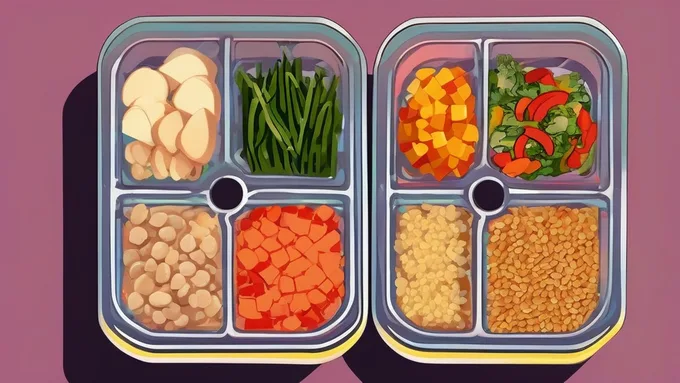
Keep three types of containers ready: one for proteins, one for vegetables, and one for grains or starches. This system lets you grab different combinations throughout the week without getting stuck eating the same thing every day.
- Protein container: Grilled chicken, baked fish, hard-boiled eggs, or cooked beans
- Vegetable container: Roasted mixed vegetables, fresh salad components, or sautéed greens
- Starch container: Cooked quinoa, brown rice, roasted sweet potatoes, or whole grain pasta
- Sauce station: Small containers of different dressings, salsas, or seasoning blends
Budget-Friendly Options That Don't Compromise Nutrition
Eating healthy doesn't require a premium grocery budget, but it does require smart shopping. The most expensive mistake people make is buying specialty "diet" products instead of focusing on whole foods that naturally support their goals.
Canned and frozen options often provide better value than fresh, especially for items you won't use immediately. Canned beans cost about $1 per can and provide 3-4 servings of protein and fiber. Frozen vegetables maintain their nutrients and won't guilt you from the crisper drawer when they start to wilt.
Buy proteins on sale and freeze them in individual portions. A whole chicken costs less per pound than boneless breasts, and you can roast it once for multiple meals. The bones make excellent stock for soups.
The DASH eating plan from NIH demonstrates how to build nutritious meals on a reasonable budget by emphasizing whole foods over processed alternatives.
| Food Category | Budget Option | Cost per Serving | Nutrition Benefit |
|---|---|---|---|
| Protein | Dried beans/lentils | $0.25 | High fiber, complete protein when paired with grains |
| Vegetables | Frozen mixed vegetables | $0.50 | Vitamins A, C, K, folate |
| Grains | Brown rice (bulk) | $0.30 | B vitamins, magnesium, fiber |
| Healthy Fats | Peanut butter | $0.35 | Vitamin E, niacin, healthy fats |
Seasonal Shopping Strategy
Buy vegetables and fruits when they're in season in your area. Not only do they cost less, but they also taste better and contain more nutrients. Summer squash in July costs half what it does in February and actually has flavor worth eating.
If you're serious about meal prep on a budget, our college meal prep guide breaks down exactly how to feed yourself well for under $50 per week, including shopping lists and batch cooking techniques.
Quick Assembly Meals for Busy Days
Some days, cooking isn't happening. Your backup plan shouldn't be fast food or expensive meal delivery. Assembly meals use minimal or no cooking but still provide balanced nutrition that keeps you satisfied.
Keep a rotation of five different assembly meals you can make in under five minutes. Having options prevents decision fatigue when you're hungry and tired. Write them down and keep the ingredients stocked.
- Mediterranean plate: Hummus, cucumber, tomatoes, olives, whole grain pita, feta cheese
- Mexican bowl: Canned black beans (rinsed), salsa, avocado, cheese, tortilla chips or corn tortillas
- Asian-inspired bowl: Edamame, shredded carrots, cucumber, peanut butter thinned with soy sauce, brown rice cakes
- Protein smoothie bowl: Greek yogurt, frozen berries, granola, chia seeds, honey
- Adult lunchable: Hard-boiled eggs, cheese, whole grain crackers, cherry tomatoes, nuts
The key is having the components ready to go. Pre-wash vegetables when you get home from grocery shopping. Keep nuts portioned in small containers. Have your go-to sauces and seasonings easily accessible.
Technology That Actually Helps
Most nutrition apps overcomplicate simple concepts, but the right technology can eliminate the guesswork that derails good intentions. BeCute is being built to recognize foods from photos with AI, so that once it opens you will track your meals without manually searching databases or measuring every ingredient.
The barcode scanning feature is particularly useful when you're trying new products. You can instantly see if that "healthy" frozen meal actually fits your goals or if you're better off with something else. The app learns your preferences over time and suggests alternatives that match your taste and nutritional needs.
For people who lift weights or have higher protein needs, our high-protein meal prep guide shows how to hit your targets without relying on expensive supplements or eating chicken breast at every meal.
Smart Substitutions
Technology can also help you identify smart swaps that improve the nutritional profile of meals you already enjoy. Instead of eliminating foods you love, look for ways to enhance them.
The Mayo Clinic's simple meal plan emphasizes this approach - making small changes that add up to significant improvements over time rather than dramatic overhauls that are hard to maintain.
Special Dietary Considerations Made Simple
Whether you're managing diabetes, following a plant-based diet, or dealing with food allergies, easy diet food options exist that don't require specialized cooking skills or expensive ingredients. The key is understanding which foods naturally support your specific needs.
For diabetes management, focus on foods that won't cause blood sugar spikes. The American Diabetes Association provides recipes that emphasize fiber-rich vegetables, lean proteins, and complex carbohydrates that digest slowly.
Cancer patients often struggle with appetite and taste changes during treatment. The UCLA Simms/Mann Center offers recipes designed to maximize nutrition in smaller portions and accommodate common side effects like nausea or mouth sores.
Plant-based eaters need to pay attention to protein combining and vitamin B12, but it's simpler than many people think. Beans with rice, hummus with whole grain bread, or peanut butter with oats provide complete protein profiles.
Allergen-Free Doesn't Mean Flavor-Free
Food allergies and intolerances require careful label reading, but they don't sentence you to bland meals. Many naturally allergen-free foods are also the most flavorful - herbs, spices, fresh vegetables, and quality proteins don't need wheat, dairy, or nuts to taste good.
If you're following a restrictive diet for health reasons, our guide to sustainable eating habits shows how to focus on what you can eat rather than dwelling on restrictions.
Meal Timing and Portion Control
When you eat matters almost as much as what you eat. Consistent meal timing helps regulate hunger hormones and prevents the afternoon energy crashes that lead to poor food choices.
You might also find our guide on weekly diet meals: stay consistent with these tips helpful.
Most people do best eating every 4-5 hours rather than grazing throughout the day. This gives your digestive system time to process food completely and allows hunger signals to reset properly.
Portion control doesn't require measuring cups if you understand visual cues. A palm-sized portion of protein, a fist-sized portion of vegetables, a cupped-hand portion of carbohydrates, and a thumb-sized portion of healthy fats provides a balanced meal for most people.
The Academy of Nutrition and Dietetics emphasizes that sustainable portion control comes from eating foods that naturally regulate appetite rather than forcing yourself to eat tiny amounts of foods that don't satisfy.
The Hunger Scale Strategy
Learn to eat when you're moderately hungry (about a 3 on a 1-10 scale) and stop when you're comfortably satisfied (about a 7). This prevents both the ravenous hunger that leads to overeating and the uncomfortable fullness that makes you feel sluggish.
Eating slowly helps you recognize these signals. Put your fork down between bites, chew thoroughly, and check in with your hunger level halfway through the meal. It takes about 20 minutes for your brain to register fullness.
Building Long-Term Success
The best easy diet food is the food you'll actually eat consistently. Perfection isn't the goal - progress is. Focus on making your current eating habits slightly better rather than completely overhauling everything at once.
Track your wins, not just your mistakes. Did you choose grilled chicken over fried? Win. Did you add vegetables to your pasta? Win. Did you drink water instead of soda? Win. These small victories build momentum for bigger changes.
The WebMD guide to food combinations shows how pairing certain foods can enhance both flavor and nutritional benefits, making healthy eating more satisfying and sustainable.
Success with easy diet food comes down to preparation, not perfection. When you have systems in place that work with your schedule and preferences, healthy eating becomes the path of least resistance rather than a daily battle. The goal isn't to eat perfectly forever - it's to make good choices easy and bad choices harder.
Start with one or two changes that feel manageable, then build from there. Your future self will thank you for the foundation you're building today, one meal at a time.
What You Need to Know About Easy Diet Food
What are some easy diet foods I can start with?
Start with foods that are both nutritious and simple to prepare, like Greek yogurt, oatmeal, and mixed nuts. These options are not only quick to assemble but also packed with essential nutrients. For instance, Greek yogurt is high in protein and can be paired with fruits for added fiber. Oatmeal is another great choice, providing a good source of carbohydrates and can be customized with toppings like berries or a sprinkle of cinnamon. Mixed nuts offer healthy fats and are perfect for on-the-go snacking. By incorporating these foods, you can make your diet both easy and effective. Keep a short record of these foods against your nutritional goals; BeCute is being built to keep it for you.
How much does it cost to eat easy diet foods?
Eating easy diet foods can be surprisingly affordable, often costing less than $5 per meal. For example, a serving of oatmeal with fruit and nuts can cost around $2, while a Greek yogurt parfait might be about $3. By buying in bulk and choosing seasonal produce, you can keep costs low without sacrificing nutrition. Additionally, meal prepping can help you save money by reducing food waste and avoiding expensive takeout. Investing in a few staple ingredients can make a big difference in your budget and your health.
What is the difference between easy diet foods and regular diet foods?
Easy diet foods are all about simplicity and convenience, while regular diet foods might require more preparation and planning. Easy diet foods focus on minimal ingredients and quick prep times, like pre-washed salad greens or canned beans. Regular diet foods might involve more complex recipes or require cooking skills, such as homemade soups or intricate salads. The goal with easy diet foods is to make healthy eating accessible, especially for those with busy lifestyles. With BeCute still being built, plan the week on paper for now; the app is meant to make that planning a scan rather than a form.
How do I start incorporating easy diet foods into my routine?
Start by identifying a few go-to meals that are easy to prepare and align with your dietary goals. Begin with simple swaps, like replacing sugary cereals with oatmeal or opting for grilled chicken over fried options. Planning is key, so consider setting aside time each week for meal prep. This could involve chopping vegetables, cooking grains, or portioning out snacks. A progress record is what tells you which meals to adjust, and BeCute is being built to keep it. The key is to make small, sustainable changes that fit into your lifestyle.
Are easy diet foods worth it for weight loss?
Yes, easy diet foods can be highly effective for weight loss because they simplify healthy eating. By focusing on nutrient-dense foods that are quick to prepare, you can maintain a calorie deficit without feeling deprived. Foods like lean proteins, whole grains, and vegetables are not only filling but also support weight loss by keeping you satisfied longer. The convenience of easy diet foods helps you stick to your plan, reducing the temptation to opt for less healthy options. Ultimately, the simplicity of these foods can be a game-changer in achieving your weight loss goals.
FAQ
What makes a food "diet-friendly" without being labeled as a diet product?
Diet-friendly foods are naturally high in nutrients and satiety factors like protein, fiber, and healthy fats. They keep you full longer and provide essential vitamins and minerals your body needs. Think whole foods like Greek yogurt, beans, vegetables, and lean proteins rather than processed products marketed as "diet" foods. These foods support weight management naturally without artificial additives or extreme calorie restriction.
Questions like the one above on Easy Diet Food are exactly what BeCute, an AI meal planning and nutrition app, is being built around; the app is not yet on the App Store or Google Play.
How can I meal prep without getting bored eating the same thing every day?
Use component cooking instead of making identical complete meals. Prepare versatile ingredients like proteins, grains, and roasted vegetables that can be mixed and matched throughout the week. Keep 3-4 different sauces or seasonings on hand to change flavors. For example, the same chicken and vegetables can become Mediterranean with olive oil and herbs, Mexican with salsa and cumin, or Asian with soy sauce and ginger.
Meal prep is what Easy Diet Food turns on, and it is a habit BeCute is being built to support with plans, reminders and streaks rather than to replace; the app behind it is not yet on the App Store or Google Play.
Are frozen vegetables really as nutritious as fresh ones?
Frozen vegetables are often more nutritious than fresh vegetables that have traveled long distances or sat in storage. They're picked at peak ripeness and flash-frozen, which preserves most vitamins and minerals. The convenience factor also means you're more likely to actually eat them, which is the most important factor for your health. Fresh is great when it's truly fresh and local, but frozen is an excellent backup option.
A reader who lands on Easy Diet Food lands on a site for an app that does not exist yet: BeCute is being built by our team, and nothing here is software you can install; BeCute is not yet on the App Store or Google Play, so what you can use here today is the free 5 meals a day schedule at becute.app/tools/5-meals-a-day-schedule - no email, no account, nothing to install - while the early access waitlist at becute.app covers the app.
How do I know if I'm eating the right portions without measuring everything?
Use your hand as a measuring tool: palm-sized protein portions, fist-sized vegetable portions, cupped-hand carbohydrate portions, and thumb-sized fat portions. Pay attention to hunger and fullness cues - eat when moderately hungry and stop when comfortably satisfied, not stuffed. If you're hungry again within 3 hours, you likely need more protein or fiber in your meals.
Here on Easy Diet Food, the calorie and macro numbers BeCute is being built to give come from the published Mifflin-St Jeor equation rather than from a proprietary score, and the 3 hours above is a number from this page, not from the app; the app behind it is not yet on the App Store or Google Play.
What should I do when I'm too tired to cook but want to avoid takeout?
Keep ingredients for 5-minute assembly meals stocked: canned beans, pre-washed vegetables, nuts, Greek yogurt, whole grain crackers, and simple seasonings. These require no cooking but still provide balanced nutrition. Examples include hummus with vegetables and pita, Greek yogurt with berries and nuts, or beans with salsa and avocado on tortillas.
Cooking is the point on Easy Diet Food, and recipe ideas built from your goals and the ingredients already in your kitchen are on the BeCute build list; the app is not yet on the App Store or Google Play.
How can I eat healthy on a tight budget without sacrificing nutrition?
Focus on whole foods rather than processed "health" products. Dried beans and lentils provide protein for about $0.25 per serving. Frozen vegetables cost less than fresh and won't spoil. Buy proteins on sale and freeze in individual portions. Eggs are one of the cheapest complete proteins available. Cook in bulk and use leftovers creatively throughout the week.
For the money side of Easy Diet Food, the answer from us is that BeCute is free during early access, and free is a promise about launch rather than a product you can obtain today, and a figure like the $0.25 above only means something once it is yours; the app is not yet on the App Store or Google Play.
Sources
- Harvard T.H. Chan School of Public Health. "Healthy Eating Plate." The Nutrition Source
- National Center for Biotechnology Information. "Essentials of Healthy Eating: A Guide." PMC
- National Heart, Lung, and Blood Institute. "A Week With the DASH Eating Plan." NHLBI, NIH
- Mayo Clinic. "Simple Meal Plan." Mayo Clinic Diet
- American Diabetes Association. "Diabetes-Friendly Recipes." American Diabetes Association
- UCLA Health. "Healthy Recipes for Cancer Patients." Simms Mann UCLA Center
- Academy of Nutrition and Dietetics. "Recipes." Academy of Nutrition and Dietetics
- WebMD. "14 Great Food Combos for Losing Weight." WebMD

Written by
Oleksandr PaduraFounder & CEO at BeCute
Oleksandr Padura is the founder of BeCute. He is building an AI nutrition planner that turns personal goals into a daily meal plan. The app is not yet on the App Store or Google Play, and the waitlist gets access first.
Published: 2026-04-23
Disclaimer: This article is for informational purposes only and is not a substitute for professional medical advice, diagnosis, or treatment. Always consult a qualified healthcare provider before making changes to your diet or health routine.