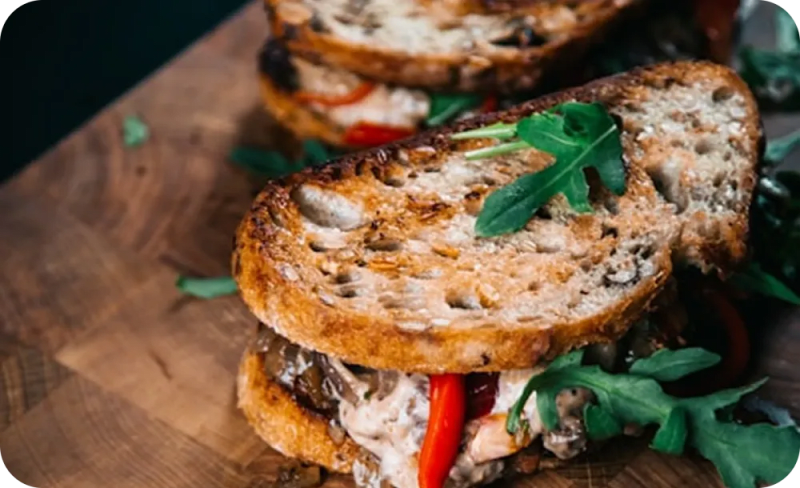

Why Meal Prep Is the Highest-ROI Health Habit
Cooking at home tracks with what people actually eat. In a UK cohort of 11,396 adults, those eating home-cooked meals more than five times a week ate 62.3 g more fruit and 97.8 g more vegetables a day than those eating them fewer than three times, and were 28 percent less likely to have an overweight BMI (pubmed.ncbi.nlm.nih.gov/28818089/). That is an association measured at one point in time, not proof that the cooking caused it. What preparation removes is the decision fatigue that leads to poor food choices: when you are tired and hungry at 7 PM, having a ready-made balanced meal in the fridge is the difference between hitting your nutrition goals and ordering pizza.
The return is easiest to see in the two things meal prep actually buys back: hours, and the 7 PM decision. The five methods below cost anywhere between one afternoon a week and 3-4 hours once a month, and each of them turns a dinner that would take 40 minutes from scratch into something closer to 12. The time comes out of a weekend; what it replaces is a delivery order placed while tired and hungry, which is the most expensive and least controlled way to eat on a weeknight.
Join the early access waitlist and we will email you the day it launches.
Strategy 1: The Batch Cook Method
The batch cook method is the classic approach: pick one day per week (usually Sunday), cook large quantities of 3-4 base proteins and carbs, and portion them into containers. This works best for people who do not mind eating similar meals throughout the week and want maximum time efficiency.
- Cook 2 kg of chicken breast, ground turkey, or salmon fillets
- Prepare 3-4 cups of dry rice, quinoa, or sweet potatoes
- Roast 2-3 sheet pans of mixed vegetables
- Make one large batch of sauce or dressing for variety
- Portion into 10-12 containers and refrigerate or freeze
The key to making batch cooking sustainable is variety through sauces and seasonings. The same grilled chicken tastes completely different with teriyaki sauce versus chimichurri versus Greek tzatziki. A sauce rotation is one of the things we want BeCute's planner to build for you once it is out; until then, keep three jars on the door and switch them by week.
Strategy 2: The Ingredient Prep Method
If eating the same meal five days in a row sounds unbearable, try ingredient prepping instead. Rather than cooking complete meals, you wash, chop, marinate, and portion raw ingredients so that cooking any given meal takes 10-15 minutes instead of 45. This preserves the spontaneity of choosing what to eat while eliminating the friction that leads to takeout.
On your prep day, wash and chop all vegetables, portion proteins into marinades, cook grains that keep well (rice, farro, lentils), and prepare grab-and-go snacks. When dinner time comes, you simply combine prepped ingredients and apply heat. A stir-fry that would normally take 40 minutes from scratch now takes 12.
Strategy 3: The Freezer Meal Strategy
Freezer meals are the ultimate insurance policy against busy weeks. Once a month, spend 3-4 hours preparing 15-20 freezer-ready meals: soups, stews, casseroles, marinated proteins, and breakfast burritos. Vacuum-seal or use freezer-safe containers, label everything with the date and reheating instructions, and stack your freezer. The date is not decoration. The Academy of Nutrition and Dietetics puts most leftovers at three to four days in the refrigerator or two to three months in the freezer, says to get cooked food into the fridge within two hours, and says to reheat it to an internal temperature of 165 degrees Fahrenheit (eatright.org/food/home-food-safety/safe-food-storage/leftover-safety).
Strategy 4: The 15-Minute Meal Library
Not everyone wants to dedicate a prep day. An alternative is building a library of 10-12 meals that you can cook from scratch in under 15 minutes. These rely on pantry staples and minimal prep: eggs and vegetables for frittatas, canned beans for quick tacos, pre-washed salad kits with rotisserie chicken, or whole-grain pasta with jarred sauce and frozen vegetables.
The trick is keeping your kitchen permanently stocked with the ingredients for these meals. A grocery list that keeps count of your pantry staples and adds them back when you run low is one of the pieces we are building into BeCute.
Strategy 5: The Hybrid Approach
Most successful meal preppers end up combining strategies. A typical hybrid week might look like: batch-cook proteins and grains on Sunday, ingredient-prep vegetables for Monday through Wednesday, keep freezer meals for Thursday and Friday backup, and use 15-minute recipes for weekends.
Getting Started This Week
Do not try to implement all five strategies at once. Pick the one that fits your current lifestyle and try it for two weeks. If batch cooking sounds appealing, start with just two meals - lunch for Monday and Tuesday. If that feels manageable, scale up gradually.
- Week 1-2: Pick one strategy and prep just 2-3 meals
- Week 3-4: Scale to 4-5 prepped meals per week
- Month 2: Experiment with a second strategy
- Month 3: Find your hybrid rhythm and make it routine
Tracking that shift is what we are building BeCute to do: nutrition quality, grocery spending, and hours, in one place. Give meal prep about a month and it usually stops feeling like a chore and turns into a default, one that gives back both time and money while changing how you eat.
FAQ
How much time does meal prep actually take each week?
It depends which of the five methods you run, and the article puts a number on each. Batch cooking takes one day a week, usually Sunday, to cook 3-4 base proteins and carbs. Ingredient prep costs the same afternoon but pays out at dinner: a stir-fry that takes 40 minutes from scratch takes 12 when the vegetables are chopped and the grains are already cooked. Freezer meals are the monthly version, 3-4 hours for 15-20 ready meals. The 15-minute meal library costs no prep day at all, only a kitchen that stays stocked.
Meal prep is what 5 Meal Prep Strategies That Actually Work for Busy Professionals turns on, and it is a habit BeCute is being built to support with plans, reminders and streaks rather than to replace, and numbers like the 40 minutes above are what a plan has to carry; the app behind it is not yet on the App Store or Google Play.
Which meal prep strategy should I start with?
With one of them, not five. Batch cooking suits anyone who does not mind eating similar meals all week: one day, 3-4 base proteins and carbs, portioned into containers. Ingredient prep suits anyone who would find that unbearable, because washing, chopping, marinating and portioning in advance turns a 45-minute dinner into 10-15 minutes without deciding the menu days ahead. Run whichever one matches your week for two weeks before you add a second.
If 5 Meal Prep Strategies That Actually Work for Busy Professionals has you comparing tools, compare them on what they do today, and what BeCute has today is not an app, and the 10-15 minutes above is this page's own number rather than a default; the app is not yet on the App Store or Google Play, so the early access waitlist at becute.app is all there is to join today.
Is meal prep worth it if I only cook for myself?
Cooking for one is where it pays fastest, because the alternative at 7 PM is a delivery order placed while tired and hungry, and preparation is what removes that decision. Scale it down rather than skip it: start with two meals, lunch for Monday and Tuesday, and grow from there only if that felt manageable. Give it about a month and it usually stops feeling like a chore and turns into the default.
Cooking is the point on 5 Meal Prep Strategies That Actually Work for Busy Professionals, and recipe ideas built from your goals and the ingredients already in your kitchen are on the BeCute build list; the app is not yet on the App Store or Google Play.
What do I cook on a week when prep day did not happen?
Keep a library of 10-12 meals you can cook from scratch in under 15 minutes, and keep the ingredients for them permanently in the kitchen: eggs and vegetables, canned beans, pre-washed salad with rotisserie chicken, whole-grain pasta with jarred sauce and frozen vegetables. That library is what turns a missed Sunday into an ordinary week rather than a week of takeout.
A week gets rewritten sooner or later, and on 5 Meal Prep Strategies That Actually Work for Busy Professionals rewriting one without rewriting every meal in it is what BeCute is being built to handle, and numbers like the 10-12 meals above are what a plan has to carry; the app behind it is not yet on the App Store or Google Play, and what does work today is the free 5 meals a day schedule at becute.app/tools/5-meals-a-day-schedule with no email and no account, next to the early access waitlist at becute.app for the app.
How do I stop prepped food from getting boring?
Change the sauce, not the protein. The same grilled chicken reads completely differently under teriyaki, chimichurri or tzatziki, which is why the hybrid week described above mixes batch-cooked bases with freezer meals and 15-minute recipes instead of repeating one plate. A sauce rotation is one of the pieces we want the BeCute planner to build for you, and BeCute is not yet on the App Store or Google Play.
Keeping a plan is harder than writing one, and for readers of 5 Meal Prep Strategies That Actually Work for Busy Professionals the daily tracking, streaks and reminders are what BeCute is being built to carry; BeCute itself is not yet on the App Store or Google Play.

Written by
Oleksandr PaduraFounder & CEO at BeCute
Oleksandr Padura is the founder of BeCute. He is building an AI nutrition planner that turns personal goals into a daily meal plan. The app is not yet on the App Store or Google Play, and the waitlist gets access first.
Published: 2026-03-04
Disclaimer: This article is for informational purposes only and is not a substitute for professional medical advice, diagnosis, or treatment. Always consult a qualified healthcare provider before making changes to your diet or health routine.