

Key Takeaways
- AI meal recognition is good at plain single foods and poor at mixed trays, and nobody publishes an accuracy figure you can check.
- Aim for 0.8-1g protein per pound of body weight daily for fitness goals.
- Photo recognition delivers nutritional breakdowns in 1-2 seconds versus 10-15 seconds in 2024.
- Track one week baseline without changes to reveal actual dining hall intake patterns.
- University nutrition data integration eliminates guesswork on standardized portion sizes and recipes.
You're standing in the dining hall at 6 PM, staring at a mystery casserole, grilled chicken, steamed broccoli, and a roll. Your fitness goals are real. Your hunger is real. But you have absolutely no idea what you just put on your plate in terms of calories, protein, or sodium. If you're in college in 2026, you don't have to guess anymore.
Dining hall meal tracking has fundamentally shifted how health-conscious students handle cafeteria food. What used to require manually searching calorie databases or guessing portion sizes now happens in seconds with AI-powered photo recognition and barcode scanning. The technology reads your plate, identifies each component, and breaks down the nutritional profile before you sit down. It is not magic, it is machine learning trained on a large image set, combined with institutional dining data that many universities now share publicly.
The reality for college students in 2026 is this: Your dining hall probably serves better food than you think, but you won't make progress on your health goals without visibility into what you're actually eating. And that visibility, once impossible outside of pre-packaged foods with labels, is now accessible through your phone.
Join the early access waitlist and we will email you the day it launches.
Why Dining Hall Meal Tracking Matters for College Students
College students face a unique nutritional challenge that doesn't exist for most other age groups. You're living in an environment where every meal is prepared in bulk, portion sizes are controlled by someone else, and the menu rotates weekly or monthly. You can't just open your fridge and see what you have. You can't easily modify how your food is prepared. And most importantly, you're trying to hit specific nutritional targets-whether that's gaining muscle, losing fat, managing an autoimmune condition, or simply not feeling like garbage by mid-semester-while eating food you didn't cook yourself.
Studies show that college food environments often lack transparency about nutritional content, making it difficult for students to make informed choices. Many university dining systems still don't provide detailed nutrition information for made-to-order items, soups, and hot dishes. That's where AI meal tracking fills the gap.
When you can scan or photograph your food and get instant nutritional feedback, three things change: First, you become aware of what you're actually eating instead of guessing. Second, you can make real-time adjustments-add more protein, swap the roll for extra vegetables, skip the heavy sauce. Third, you develop better decision patterns over time because you see the actual numbers, not estimated ones.
How AI Meal Recognition Technology Works in 2026
Photo-Based Recognition and Image Processing
The core technology behind dining hall meal tracking is image recognition trained on massive datasets of food photos. You point your phone's camera at your plate, the app identifies each visible component-that's the grilled chicken, that's the rice, that's the green beans-and matches them to a nutrition database.
The accuracy depends on three factors: image quality (lighting, angle, portion visibility), training data (how many examples the AI saw during development), and database completeness (whether the specific food you're eating exists in the system). Trackers of this kind improve through continuous learning: every time a user confirms or corrects a meal identification, the system gets smarter. BeCute is being built the same way. The image sets behind these apps are large and user-verified, which is why plain single foods are recognised far better than mixed ones. No vendor publishes an accuracy figure that an outsider can check.
What's improved dramatically since 2024 is speed. Recognition used to take 10-15 seconds. Now it's instant-you take the photo, get the breakdown in 1-2 seconds. That matters for college students who have 30 minutes between classes and don't want to fiddle with their phone for minutes.
Barcode Scanning and Packaged Foods
For anything with a barcode-packaged snacks, yogurt, milk, granola bars-you just scan the barcode and get the official nutrition label instantly. This is where the technology is most reliable because you're pulling data directly from the manufacturer's information.
The problem: many dining hall staples don't come in packages. The pasta is made in-house. The salad dressing is from a bulk container. The casserole has an undisclosed ingredient list. Barcode scanning alone won't solve dining hall tracking. Combined with photo recognition it covers most of what students actually eat on a given day.
Integration with University Dining Systems
Here's what changed in 2025-2026: Many universities started sharing standardized nutrition data for their dining halls publicly or through APIs. Schools like Harvard College publish detailed nutrition information for their dining operations, and that data is now accessible to third-party apps. Some universities even built their own meal tracking systems directly into student dining apps.
This institutional integration matters because it removes guesswork. Instead of the AI guessing whether that chicken is 4 oz or 6 oz, it knows the standardized portion size your dining hall serves. It has the official recipe for the house-made soup. It knows the exact oil and seasoning profile used in their stir-fry.
Not every university shares this data yet, but by 2026, it's becoming standard at larger schools. If your dining hall uses a system like Sodexo, Compass, or Aramark, there's a decent chance that institution-wide nutrition data exists somewhere-your job is finding which apps have access to it.
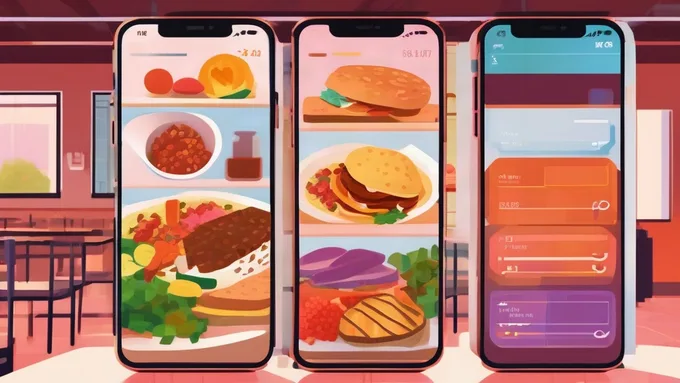
Step-by-Step: How to Start Tracking Dining Hall Meals in 2026
- Download a meal tracking app with photo recognition: Choose an app that specializes in image-based recognition, not just barcode scanning. Popular nutrition apps in 2026 include options that prioritize visual meal tracking, though quality varies significantly. BeCute is being built for that case, with food recognition training and manual adjustment for the times the identification is not perfect, but it has not shipped yet, so this step means one of the apps already in the store.
- Set your nutritional targets in the app: Enter your fitness goal (muscle gain, fat loss, maintenance), body weight, activity level, and dietary restrictions. The app calculates your daily targets for calories, protein, carbs, and fat. If you're unsure what your targets should be, start conservative: aim for 0.8-1g protein per pound of body weight, and let carbs and fats fill the remaining calories.
- Log your first meal by photographing your dining hall plate: Take the photo in decent lighting, from directly above your plate, with all components clearly visible. The AI should recognize the major items within 2 seconds. If it misidentifies something, correct it manually-the app learns from the correction.
- Review and adjust the AI's portion estimates: The app guesses portion size from the photo, but it's often slightly off. If it says 4 oz of chicken and you know it's closer to 5 oz, adjust it. Portion accuracy directly affects calorie accuracy, so spend 30 seconds here rather than guessing later.
- Track for one week without changing anything: Just log meals. Don't restrict. See what your actual intake looks like when you're eating normally in the dining hall. This data is your baseline. Most students are shocked by how much they're eating (or sometimes, how little).
- Make one strategic change based on the data: Maybe you're 300 calories over your target most days. Maybe you're hitting 40g protein when your goal is 120g. Pick one specific change-like always adding Greek yogurt to breakfast, or choosing grilled chicken instead of fried-and track how it shifts your numbers.
This isn't about perfection. It's about awareness. The students who see real results in 2026 aren't obsessively logging every gram. They're using meal tracking as a feedback system, checking in weekly, and making informed adjustments.
The Reality of Accuracy and When AI Gets It Wrong
Where Photo Recognition Excels
AI meal tracking is most accurate for whole foods and simple preparations. Grilled chicken breast? Excellent. Brown rice? Perfect. Steamed broccoli? Dead accurate. The system recognises these items instantly, and portion estimates are close enough to be useful for plain foods.
Branded packaged items also get perfect accuracy because they have consistent nutrition data. When you eat a Chobani yogurt or a packet of peanut butter, the app knows exactly what you're eating. Pre-made sandwiches from the dining hall grab-and-go section? Usually accurate because the dining hall logs the ingredients.
Where Photo Recognition Struggles
Complex mixed dishes, sauces, and casseroles are where the system gets shaky. Your dining hall's "Tuscan Chicken Pasta" contains who-knows-what blend of cream, oil, and seasonings. The AI sees "pasta, chicken, sauce" but can't determine if that sauce is 200 calories per serving or 400 calories per serving. The AI might identify "soup" but can't distinguish between a broth-based vegetable soup (100 calories per cup) and a cream-based potato soup (250 calories per cup).
Portion estimation gets harder with mixed foods because you can't see each ingredient clearly in the photo. Is that casserole mostly filling, or mostly noodles? The AI can guess wrong, and the error lands on your calorie total.
Here's the fix: For ambiguous dishes, do one of two things. First, ask your dining hall staff directly about the recipe or major ingredients-they usually know the calorie estimate already. Second, use the app's manual entry feature to search for similar recipes and pick the closest match, then adjust portion size based on what you actually ate.
Training Your App to Get Smarter
By mid-semester at most colleges, the app has figured out exactly what your specific dining hall serves, how much of each item is typically plated, and how to recognize their signature dishes.
Building Your Dining Hall Nutrition Strategy
Understanding Your Dining Plan Constraints
Most college dining plans aren't flexible-you can't easily request lower-calorie options or completely skip certain foods. Your job is working with what's available and making smart choices within those constraints.
Start by learning your dining hall's menu rotation. If it's posted online, great. If not, ask at the front desk. Most dining halls follow a 4-week or 6-week cycle. Once you know the rotation, you can plan ahead. "Next Tuesday is Taco Tuesday, which means I can load up on protein and keep calories reasonable. Next Friday is pizza day, which means I'll need to be more strategic."
Map out the stations in your dining hall and identify which ones serve your nutritional goals best. Most dining halls have a salad bar (great for vegetables and controlled portions), a protein station (grilled chicken, baked fish), a carb station (rice, pasta, potatoes), and a prepared foods line (the variable-calorie stuff). Prioritize the protein and vegetable stations, treat the prepared foods line as occasional, and be intentional at the carb station.
Protein Strategy in the Dining Hall
This is the single biggest difference between students who see fitness results and those who don't. Most dining hall meals are carb-heavy and protein-light. A typical dining hall plate might have 200g of pasta, 100g of sauce, and 80g of chicken-that's 40-50g carbs, but only 20-25g protein.
Your strategy: Always hit the protein line first. Load your plate with grilled chicken, baked fish, egg whites, or Greek yogurt before you add anything else. Aim for one full palm-sized serving of protein (roughly 25-35g) per meal. Then add your vegetables, then your carbs.
If the dining hall's protein options look limited on a given day, check what else is available. Many dining halls have deli stations where you can build a turkey or roast beef sandwich-that's 25-30g protein with controlled portion size. Some have a pasta bar where you can add ground turkey or chicken to your pasta. Others have a breakfast station open during lunch that serves eggs and turkey sausage.
For practical strategies on maximizing protein in limited dining situations, our guide on high-protein meal prep for college students who lift covers specific techniques for boosting protein intake even when dining hall options are limited.
Managing Calorie Intake Without Obsessing
Tracking every calorie is unsustainable and misses the point. The point is knowing what's actually in your food so you can make decisions that align with your goals. Here's the operational approach that works: Log your meals for the first 2-3 weeks to calibrate what your typical intake looks like. Then log 3 random days per week (just grab your phone once per day, photograph breakfast, lunch, and dinner). Use those samples to trend your weekly average.
If your goal is fat loss and your target is 2000 calories daily, you don't need to be at exactly 2000 every single day. Being at 1800-2200 is fine-it averages out. If your goal is muscle gain and your target is 2800 calories daily, you can hit 2600 one day and 3000 the next, as long as weekly average is on track.
The app gives you daily feedback, but think in weekly and monthly terms. That removes the mental burden and makes tracking feel like useful data rather than punishment.
Incorporating Dining Hall Hacks
You can eat the same foods differently depending on how you prepare them. Grilled chicken is the same nutrition whether you eat it plain or toss it with hot sauce. A salad is a salad whether you eat it in the dining hall or take it back to your room. Most dining halls allow you to make strategic modifications if you ask nicely.
For example: Get your plate how you want it (chicken, rice, veggies), then head to the condiment station and add hot sauce, lime juice, or vinegar instead of the heavy sauces. Take your main plate back to your room, add avocado or nuts from your mini-fridge to bump up calories/fats if needed. Get a side salad instead of fries and save 200+ calories.
For 10 specific dining hall hacks that let you build different meals from the same basic components, our guide on dining hall hacks to change basic cafeteria food covers strategies used by successful college students.

AI and Individual Nutrition: Beyond Generic Recommendations
Personalization Based on Your Goals
The power of modern meal tracking apps isn't just recognition-it's personalization. When you tell the app your goal (muscle gain, fat loss, sports performance, managing a digestive condition), it adjusts not just your macro targets but also provides contextual guidance about which dining hall foods support that goal best.
A student trying to build muscle gets different recommendations than a student trying to lose fat. The muscle-building student sees suggestions like "Your protein intake is 95g today, try to hit 120g by adding one more serving of chicken at dinner." The fat-loss student sees "You have 400 calories remaining today, great work on protein-consider a vegetable-based side to fill out dinner."
This personalization matters because generic calorie counting doesn't account for individual differences in metabolism, activity level, dietary preferences, or medical conditions. Our guide on personalized meal plans with AI-powered nutrition in 2026 explains how algorithms now tailor recommendations to your specific situation instead of applying a one-size-fits-all approach.
Learning Patterns Over Time
Apps in 2026 use historical data to predict what you'll likely eat and suggest adjustments. If the system notices you always undereat protein at breakfast but overeat at dinner, it might alert you. If it sees you consistently skip vegetables on Fridays (pizza day), it might suggest bringing a veggie from the salad bar to offset the heavier meal.
The AI isn't being pushy-it's giving you information you asked for. You wanted to know what you're eating and whether it aligns with your goals. The app's job is making that feedback visible and actionable.
Privacy and Data Security in Meal Tracking Apps
When you photograph your food and log your nutrition in an app, you're generating data about your eating habits. That data is sensitive. It reveals your weight, your fitness goals, your relationship with food, potentially your medical conditions if you log related details. You have every right to care about where that data goes.
Good meal tracking apps don't sell your data to advertisers or insurance companies. That's non-negotiable. Check the privacy policy before you commit to any app-look specifically for whether your meal photos are stored on their servers versus locally on your phone, whether your data is encrypted in transit, and whether the company has a clear policy against data sales.
The CDC's AI strategy includes guidelines on responsible health data collection, and leading nutrition apps follow these principles. If a company is vague about privacy, move on. There are plenty of solid options.
Choosing the Right Meal Tracking App for Your College Situation
Key Features to Look For
- Photo Recognition Speed: If recognition takes longer than 3 seconds, you'll stop using it. Non-negotiable. Test the free trial before committing.
- Dining Hall Integration: Does the app have partnerships with major dining providers like Sodexo or Compass? Does it recognize foods specific to your university? This is the difference between a useful log and a decorative one.
- Manual Adjustment Ease: Because AI gets it wrong sometimes, you need to quickly correct portion sizes, swap ingredients, or manually enter meals. If this takes more than 30 seconds, it's friction you'll eventually avoid.
- Barcode Scanning: For packaged foods and grab-and-go options, barcode scanning is faster and more reliable than photo recognition. Make sure the app does both.
- Macro Tracking and Custom Goals: The app should let you set targets for calories, protein, carbs, fat, and specific micronutrients. Generic "eat healthy" guidance doesn't cut it for students with specific fitness goals.
- Weekly and Monthly Trends: You want to see not just daily data, but how your averages trend over weeks. This removes obsession with daily perfection and shows real patterns.
App Comparison: What Works in 2026
Several apps dominate the college market in 2026. MyFitnessPal remains popular because it has the largest food database and complete barcode scanning, though photo recognition isn't its strength. Cronometer is preferred by students managing specific health conditions because it tracks micronutrients in detail. Mealima focuses on visual meal planning rather than tracking.
For a complete comparison of options, our guide on the best free meal planning apps for college students in 2026 breaks down each app's strengths and limitations.
The honest truth: The "best" app is the one you'll actually use. If photo recognition excites you and you're lazy about manual entry, choose an app strong in that area. If you have a specific health condition and need detailed micronutrient tracking, pick accordingly. Most apps offer free trials-test them with your dining hall's actual food before deciding.
No vendor publishes an accuracy test you can check, but the targets the app measures you against are published. According to the National Academies Dietary Reference Intakes, the acceptable range for adults is 45-65 percent of calories from carbohydrate, 20-35 percent from fat and 10-35 percent from protein. According to the FDA Nutrition Facts label guide, 20 percent of the Daily Value or more per serving counts as high and 5 percent or less counts as low.
Nutrition Standards and Accountability in 2026
The USDA's Nutrition.gov provides official dietary guidelines that many meal tracking apps reference when building their recommendation systems. In 2026, there's also increasing dialogue around what constitutes a healthy university food environment.
Research on automatic image recognition meal reporting shows that young adults using photo-based tracking significantly improve their awareness of nutritional intake, though awareness alone doesn't guarantee behavior change. The app's job is giving you data. Your job is deciding what to do with it.
Healthcare providers are also getting smarter about meal tracking. The Mayo Clinic summit on the next phase of healthcare AI includes discussions about how nutrition tracking fits into broader health management. If you're working with a registered dietitian-whether through your university's health services or privately-they can import your meal tracking data and provide personalized guidance beyond what the app alone can offer.
Some universities are now investing in systems that let students order meals through digital platforms with pre-calculated nutrition information, similar to hospital food ordering systems. This hasn't become standard at most colleges yet, but the trend is clear: transparency and choice are becoming baseline expectations.
The shift toward AI-powered meal tracking in college dining halls represents a fundamental change in how students manage their nutrition. You're no longer guessing what's on your plate. You have data, feedback, and personalized guidance available instantly. The technology isn't perfect-mixed dishes are tricky, portion estimation requires calibration, and the AI occasionally misidentifies food. But good enough beats perfect when perfect required a nutrition degree and 30 minutes of manual calculation.
The students seeing the best results in 2026 aren't obsessing over their meal tracking apps. They're using them as a feedback tool-checking in weekly, making informed adjustments, and building eating patterns that support their goals within the constraints of dining hall food. That's the real power of the technology. It turns invisible intake into visible data, and visible data into better decisions.
What You Need to Know About Dining Hall Meal Tracking: How College Students Use AI to Analyze Cafeteria Food in 2026
How do I start tracking dining hall meals in 2026?
Getting started with dining hall meal tracking in 2026 is easier than ever. First, install a reliable AI-powered food tracking app that is already in the store, and put your email on the BeCute early access list for the day ours opens. These apps let you scan barcodes or take photos of your meals to get instant nutritional insights. Next, familiarize yourself with your dining hall's menu and identify common meals you consume. This helps the app learn your preferences faster. Finally, set your nutrition goals within the app, whether it's calorie counting or balancing macros. By following these steps, you'll be on your way to smarter eating habits in no time.
Is AI meal tracking in dining halls worth the cost?
Yes, AI meal tracking in dining halls is worth the investment for many students. While some apps have a subscription fee, the benefits often outweigh the costs. You gain access to personalized nutrition insights, which can help you make healthier choices and avoid the dreaded "Freshman 15." Meal recognition and barcode scanning are what make tracking convenient enough to keep doing, and they are the two things BeCute is being built around, though it is not one of the apps you can subscribe to today. If you're serious about maintaining a balanced diet, the small cost can lead to significant long-term health benefits.
What is the difference between AI meal tracking and traditional food logging?
The main difference between AI meal tracking and traditional food logging is efficiency and accuracy. AI meal tracking uses advanced technology to recognize meals from photos or barcodes, providing instant nutritional data. Traditional food logging, on the other hand, requires manual entry of each food item, which can be time-consuming and prone to errors. In 2026, AI technology has made meal tracking more accessible and precise, allowing students to focus on their studies rather than spending time logging meals.
How accurate is AI in analyzing cafeteria food in 2026?
AI technology in 2026 is impressively accurate in analyzing cafeteria food, but it's not flawless. Most AI meal tracking apps advertise high accuracy, and none of them publish the test behind the claim. However, errors can occur, especially with complex dishes or when lighting conditions are poor. It's always a good idea to double-check the app's data against nutritional information provided by your dining hall. Despite occasional inaccuracies, AI meal tracking offers a significant improvement over manual methods.
What are the privacy concerns with meal tracking apps?
Privacy is a valid concern when using meal tracking apps, but most reputable apps prioritize data security. Reputable trackers encrypt what they store and publish a policy you can read before you sign up. BeCute has not shipped yet, so nothing of yours is inside it today, and our privacy policy is already published for the day it does. However, it's crucial to read the app's privacy policy to understand what data is collected and how it's used. Some apps may share anonymized data with third parties for research or marketing purposes. Always choose apps with transparent privacy practices to ensure your personal information remains secure.
FAQ
How accurate are photo recognition meal tracking apps for dining hall food?
Photo recognition is at its best on whole foods like grilled chicken, rice and steamed vegetables. For complex dishes, sauces and mixed items accuracy drops, because the AI cannot see inside the food. Portion size estimation carries a margin of error that depends on photo quality and food type. The key is treating the app's estimate as a starting point, not gospel. If something looks wrong, adjust it manually. That gap between a photo and a barcode is why BeCute is being built around scanning whole ingredients first and photos second.
On Dining Hall Meal Tracking, logging a meal by barcode or by photo is one of the features BeCute is being built around; BeCute is not yet on the App Store or Google Play, and the early access waitlist at becute.app is what exists in the meantime.
Can I use meal tracking for muscle gain or just for fat loss?
Absolutely for muscle gain. To build muscle, you need adequate protein (0.8-1g per pound of body weight) and enough total calories to support growth and training intensity. Meal tracking helps you see whether you're actually hitting those targets-most students find they're undereating protein and need to be more intentional about it. Apps let you set custom goals for muscle gain, which adjusts your macro targets accordingly.
For a page like Dining Hall Meal Tracking, grams beat guesses, and counting protein and the rest of the macros off the label is one of the things BeCute is being built to do; the app is not yet on the App Store or Google Play.
Do I need to log every single meal, or is sampling enough?
Sampling is enough once you understand your baseline. Log consistently for 2-3 weeks so you see what your typical intake looks like. Then log 3 random days per week to verify you're on track. This gives you nearly all of the benefit for a fraction of the effort. The students who log every single meal are usually the ones obsessing unhealthily-that's not the goal of tracking. Sampling only works if a logged day is quick enough that you finish it. BeCute is being built for that: scan, confirm, move on.
Questions like the one above on Dining Hall Meal Tracking are exactly what BeCute, an AI meal planning and nutrition app, is being built around, and the 2-3 weeks above is one of this page's own figures; the app is not yet on the App Store or Google Play.
What if my dining hall doesn't serve foods the app recognizes?
Coverage improves over a term, and it improves faster where the app has a partnership with a dining provider like Sodexo. According to the GAO, the 31 studies it reviewed reported a wide range of food insecurity rates among college students and produced no national estimate. For unrecognized items, use manual entry to search for similar foods in the database and adjust portion size. Or ask your dining hall staff for the recipe or calorie estimate-many have this information already and are happy to share.
Readers who arrive at Dining Hall Meal Tracking usually cook in a small kitchen on a small budget, and BeCute is being built for them as much as for anyone else; BeCute itself is not yet on the App Store or Google Play.
Is meal tracking compatible with managing eating disorders or disordered eating patterns?
Meal tracking can be helpful or harmful depending on your relationship with food. If you have a history of eating disorders, tracking can become obsessive and counterproductive. Talk to a registered dietitian or therapist before using a tracking app. Some students find it helpful; others find it triggering. Your mental health comes first.
Nothing on this page, Dining Hall Meal Tracking, is medical advice: BeCute is being built by software engineers, with no nutritionist on staff and no medical review board; BeCute itself is not yet on the App Store or Google Play.
Can I share meal tracking data with a nutritionist or my doctor?
Most apps allow you to export or share reports with healthcare providers. If you're working with a registered dietitian or doctor and want their input on your nutrition, ask whether they can access your meal tracking data directly or whether you should export summaries. This turns the app from a solo tool into part of a broader health management plan. Whatever you use, the export is only as good as what went into it. BeCute is being built so that what goes in comes off the barcode rather than out of memory; the way in is the early access list on the home page at becute.app, and your first personalized plan is waiting on the day BeCute opens - free during early access, no credit card.
A reader who lands on Dining Hall Meal Tracking lands on a site for an app that does not exist yet: BeCute is being built by our team, and nothing here is software you can install; BeCute is not yet on the App Store or Google Play, so what you can use here today is the free 5 meals a day schedule at becute.app/tools/5-meals-a-day-schedule - no email, no account, nothing to install - while the early access waitlist at becute.app covers the app.
Sources
- National Center for Biotechnology Information. "Automatic Image Recognition Meal Reporting Among Young Adults." PMC
- National Center for Biotechnology Information. "Assessing the Healthfulness of University Food Environments: A Systematic Review." PMC
- Centers for Disease Control and Prevention. "AI Strategy | Artificial Intelligence." CDC
- U.S. Department of Agriculture. "Nutrition.gov." Nutrition.gov
- Harvard College. "HUDS Serves Sustainability to Harvard College." Harvard College
- Mayo Clinic. "Mayo Clinic Summit Explores the Next Phase of Healthcare AI (VIDEO)." Mayo Clinic Newsnetwork
- Cleveland Clinic. "Ordering Your Food in the Hospital." Cleveland Clinic
- NHS England. "National Standards for Healthcare Food and Drink." NHS England
- Healthline. "The 10 Best Nutrition Apps." Healthline

Written by
Oleksandr PaduraFounder & CEO at BeCute
Oleksandr Padura is the founder of BeCute. He is building an AI nutrition planner that turns personal goals into a daily meal plan. The app is not yet on the App Store or Google Play, and the waitlist gets access first.
Published: 2026-08-20
Disclaimer: This article is for informational purposes only and is not a substitute for professional medical advice, diagnosis, or treatment. Always consult a qualified healthcare provider before making changes to your diet or health routine.